

Bonusul Las Vegas fără depunere: plafonul câștigurilor și limitele de retragere
Un bonus fără depunere oferă acces la jocuri online fără ca utilizatorul să alimenteze mai întâi contul. În cazul unui
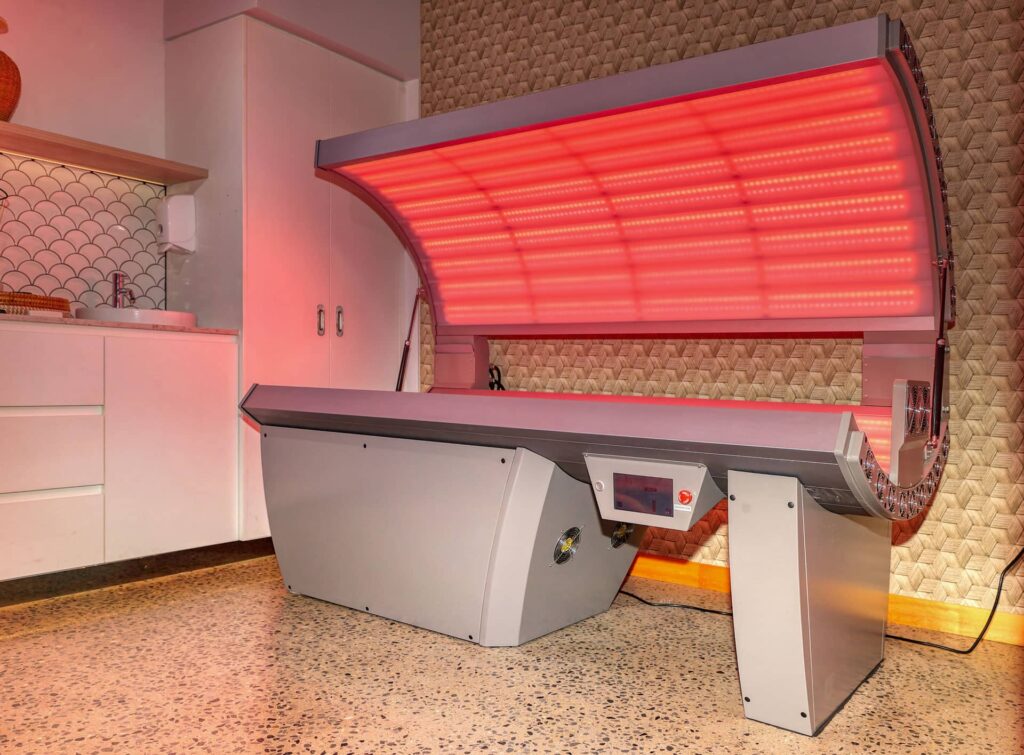
Loose skin is a common concern for patients across dermatology, wellness, and rehabilitation settings. It appears after weight loss, pregnancy, natural aging, and changes in collagen density.
Clinics look for solutions that are noninvasive, safe, and consistent, especially for patients who are not ready for surgical tightening procedures.
This is where photobiomodulation becomes relevant. Many professionals now ask, does red light therapy work for loose skin, and how does it support tissue firmness in a clinical environment.
This overview brings together current research, clinical observations, and device considerations to help practitioners understand what red and near-infrared light can realistically achieve.
Before discussing light-based solutions, it helps to revisit why loose skin forms in the first place. Most cases involve a combination of reduced collagen density, slower cellular turnover, impaired circulation, and environmental stressors.
Aging reduces fibroblast activity, which limits the body’s ability to rebuild structural proteins. Weight fluctuations stretch the dermal matrix faster than it can recover. Even lifestyle and medical conditions influence elasticity.
Clinicians often explain to patients that loose skin is not the result of a single factor. It develops gradually as collagen fibers weaken, hydration decreases, and the extracellular matrix loses firmness.
Treatments that encourage cellular repair, improve circulation, or stimulate fibroblast behavior can support better tone and gradual tightening.
This is the foundation for understanding why photobiomodulation beds is considered a supportive modality.
Photobiomodulation uses specific wavelengths of red and near-infrared light to influence cellular activity. The light is absorbed by chromophores in the mitochondria, which can support ATP production. When cellular energy improves, tissues may function more efficiently, including repair, turnover, and collagen-related processes.
Research indicates that red light can influence fibroblast signaling. These cells are responsible for building collagen and elastin, two proteins essential for firm, elastic skin.
Studies also show improvements in microcirculation, which helps deliver nutrients to the dermis and supports waste removal. Both of these factors are relevant to clinics evaluating is red light therapy good for loose skin and whether it has practical value in treatment plans.
Many clinics report gradual textural improvements in patients who receive consistent sessions several times each week. Results tend to accumulate over time rather than appear immediately.
Red light therapy is not a direct tightening device in the same way as RF or ultrasound. Instead, it supports the skin’s natural rebuilding processes. For many patients, this is a more comfortable and approachable starting point.
There is growing clinical evidence that red and near-infrared wavelengths have measurable effects on skin quality.
Several studies have documented increases in collagen density, improvements in wrinkle depth, and enhanced elasticity after repeated photobiomodulation exposure.
Research has also identified the role of mitochondrial activation and improved cellular energy in supporting dermal rebuilding. While individual outcomes vary, these findings help answer does red light therapy work for loose skin in a professional context.
The evidence supports the idea that light-based stimulation helps the skin behave more youthfully.
Clinicians commonly pair photobiomodulation with other restorative treatments. Because the light supports cellular efficiency, it can complement topical therapies, microneedling, injectables, and recovery-based procedures. Many practices integrate it as part of a broader skin health protocol to encourage long-term resilience.
Across wellness, dermatology, sports medicine, and post-rehabilitation environments, professionals choose red light therapy for several practical reasons. The modality is comfortable, noninvasive, and suitable for repeated use.
Many facilities rely on it as a foundation for skin revitalization, because it supports consistent patient engagement and produces gradual change without downtime.
Clinics often observe:
These observations align with research findings on red and near-infrared wavelengths. While photobiomodulation does not replace surgical tightening or high-energy technologies, it supports the underlying processes patients need for healthier, firmer skin.
Professional full-body systems also offer the advantage of treating multiple concerns at once.
Patients addressing loose skin often present with additional issues like inflammation, slow healing, muscular discomfort, or general fatigue. A whole-body approach helps providers support wellbeing across several systems simultaneously.
Light-based support is not a direct replacement for procedures that use heat, mechanical energy, or surgical tightening. Instead, it adds value by improving the skin’s foundation.
Clinics often position photobiomodulation as a maintenance tool, a recovery aid, or a preparatory step that improves tissue behavior before a more targeted treatment.
For example, patients receiving microneedling or RF skin tightening sometimes respond better when the skin is already functioning efficiently.
Improving circulation and supporting mitochondrial health can set the stage for faster recovery and a more balanced inflammatory response. These are important considerations when determining is red light therapy good for loose skin in a treatment plan.
When integrated into a structured program, red light therapy helps patients maintain improvements between higher-intensity sessions. Many practices find it beneficial for long-term retention and compliance, since patients enjoy the relaxing nature of each session.
Most clinics describe red light therapy outcomes as gradual but meaningful. Because the changes are driven by natural collagen rebuilding and intracellular activity, improvements develop over weeks to months. Providers typically notice:
These improvements align with the biological processes stimulated by red and near-infrared wavelengths. As long as the clinic sets clear expectations and uses a consistent treatment schedule, patient satisfaction tends to be positive.
Comparatively, surgical tightening or high-intensity energy devices produce faster or more dramatic change. But photobiomodulation offers a comfortable, low-risk option that supports long-term tissue health, making it valuable for patients seeking a noninvasive approach.
For loose skin concerns, consistent exposure and correct wavelength delivery matter more than extreme intensity. Professional systems designed for clinical environments help ensure the treatment is uniform, repeatable, and aligned with photobiomodulation principles.
TX Transform systems are developed for full-body clinical use. They are designed to deliver consistent light exposure across large surface areas, which helps practitioners treat loose skin concerns on multiple regions simultaneously.
Clinics appreciate systems that support predictable treatment sessions, simple workflows, and comfortable patient positioning.
As with any medical or wellness technology, the value comes from reliability, safety, and ease of integration into existing protocols. These elements tend to matter more in real-world clinical settings than complex technical specifications.
In a clinical environment, the answer is yes. Red light therapy can support improvements in skin firmness, elasticity, and overall quality. The mechanism is rooted in cellular energy enhancement, fibroblast activity, and circulation.
While it does not replace direct tightening procedures, it works well as a supportive modality for patients seeking gradual, natural improvements.
For practitioners managing a range of skin and wellness needs, photobiomodulation provides a versatile, patient-friendly option. Outcomes strengthen with consistency, thoughtful protocol design, and reliable equipment.
Un bonus fără depunere oferă acces la jocuri online fără ca utilizatorul să alimenteze mai întâi contul. În cazul unui
Uneori, divertismentul începe înainte să apară vreun joc pe ecran. Poate fi un moment liniștit, la finalul unei zile aglomerate,
Online casino entertainment is often described through its games, but the first impression usually comes from everything around them. A
An online casino can feel busy before a game has even appeared on screen. Bright tiles, animated banners, crowded menus